Phosphorus Group - Energy and Bone Support
Educational content only. This page provides factual information about phosphorus, food sources, and general metabolic functions. It is not medical advice or diagnosis.
Understanding Phosphorus
Phosphorus is a macromineral - meaning it is needed in relatively large quantities by the human body. It is the second most abundant mineral in the body after calcium. Phosphorus plays numerous important roles in cellular function and energy metabolism.
General Roles in Metabolism
Phosphorus has multiple recognized functions in human physiology:
- Energy Production: Phosphorus is a key component of ATP (adenosine triphosphate), the primary energy currency of cells. Without phosphorus, the body cannot efficiently produce and utilize cellular energy.
- Bone and Tooth Structure: Phosphorus works with calcium to form the mineral matrix of bones and teeth, contributing to structural integrity.
- DNA and RNA: Phosphorus is essential for nucleic acid structure, which is fundamental to protein synthesis and genetic information storage.
- Cell Membrane Structure: Phospholipids, which contain phosphorus, form the fundamental structure of cell membranes.
- pH Buffering: Phosphorus compounds help maintain blood pH within a normal range through buffering systems.
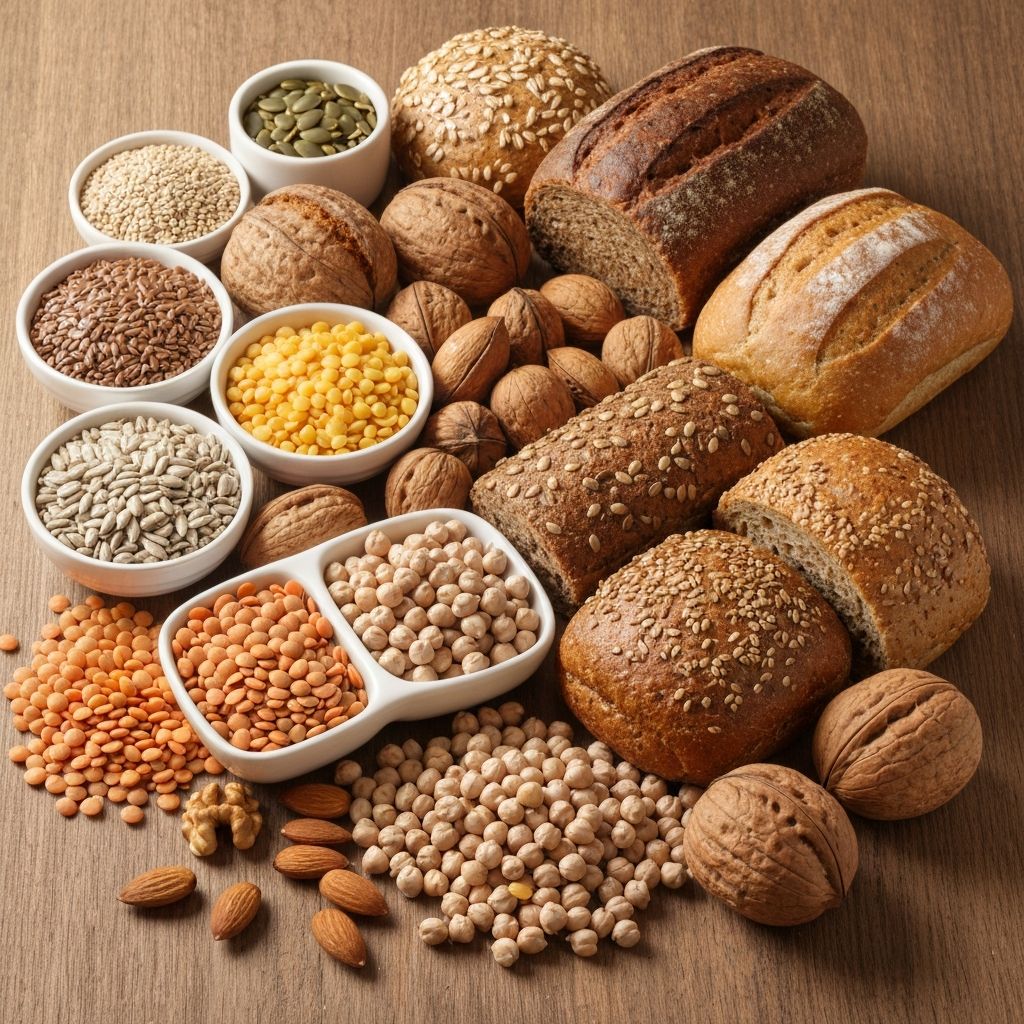
Legumes, grains, nuts, and proteins are excellent sources of phosphorus
Common Dietary Sources
Animal-Based Sources
- Fish and seafood
- Poultry
- Meat
- Eggs
- Dairy products
Plant-Based Sources
- Legumes: beans, lentils, chickpeas
- Nuts and seeds: almonds, pumpkin seeds, sunflower seeds
- Whole grains: brown rice, oats, wheat
- Dairy alternatives and fortified products
Nutritional Reference Intakes
The recommended dietary allowance (RDA) for phosphorus varies by age:
- Adults aged 19-50 years: 700 mg daily
- Adults over 50 years: 700 mg daily
- Variations exist for children and adolescents
Calcium-Phosphorus Balance
The body carefully maintains a balance between calcium and phosphorus. Optimal bone health typically requires an appropriate ratio of these minerals working together. Dietary patterns that include adequate amounts of both minerals support normal bone maintenance and density.
Bioavailability and Absorption
Phosphorus is generally well absorbed from food sources. However, bioavailability can vary based on:
- Chemical form of the phosphorus
- Overall dietary composition
- Individual digestive health
- Vitamin D status (which affects mineral absorption)
Variability Among Populations
Dietary phosphorus intake varies among populations due to differences in:
- Food availability and agricultural patterns
- Traditional dietary preferences
- Protein intake levels
- Grain consumption patterns
Important Note: This information is provided for educational purposes. Individual nutritional requirements vary. Please consult healthcare professionals for personal nutritional guidance.