Active Daily Nourishment
Exploring vitamins, minerals, and supportive dietary compounds for routine balanced consumption and everyday vitality
Understanding Nutrition Fundamentals
Welcome to ActiveNourish, an educational resource dedicated to sharing general knowledge about the role of vitamins, minerals, and dietary compounds in ordinary human metabolism. Our content explores how these substances support everyday wellness through typical eating patterns and balanced nutrition.
Educational content only. No promises of outcomes. This site provides informational content about nutrition concepts and food sources. It does not offer medical advice, diagnosis, treatment, or personal recommendations.
Explore Nutritional Categories
Vitamin A Family
Understanding beta-carotene and vitamin A sources in common foods, and their general role in vision cell maintenance and epithelial tissues.
Explore furtherPhosphorus Group
Neutral deep-dive into phosphorus presence in proteins and grains, and its involvement in energy compounds and bone matrix.
Explore furtherCopper Compounds
Food distribution of copper and its participation in enzyme systems for connective tissue formation and metabolism.
Explore furtherActive Lifestyle Dietary Patterns in Indonesia
Exploring how daily activities relate to typical nutrient intake patterns and the importance of balanced whole-food consumption in tropical settings.

Rich Sources of Vitamin B-Complex
| B-Vitamin Type | Common Food Sources | General Role in Metabolism |
|---|---|---|
| B1 (Thiamine) | Whole grains, legumes, pork, seeds | Energy metabolism, nerve function |
| B2 (Riboflavin) | Eggs, almonds, mushrooms, dairy | Energy production, cellular growth |
| B3 (Niacin) | Chicken, tuna, mushrooms, peanuts | DNA repair, energy metabolism |
| B5 (Pantothenic) | Avocado, eggs, mushrooms, salmon | Hormone production, energy metabolism |
| B6 (Pyridoxine) | Chickpeas, bananas, salmon, potatoes | Amino acid metabolism, immune support |
| B12 (Cobalamin) | Fish, eggs, dairy, fermented foods | Nerve function, red cell production |
Important Macrominerals and Dietary Examples
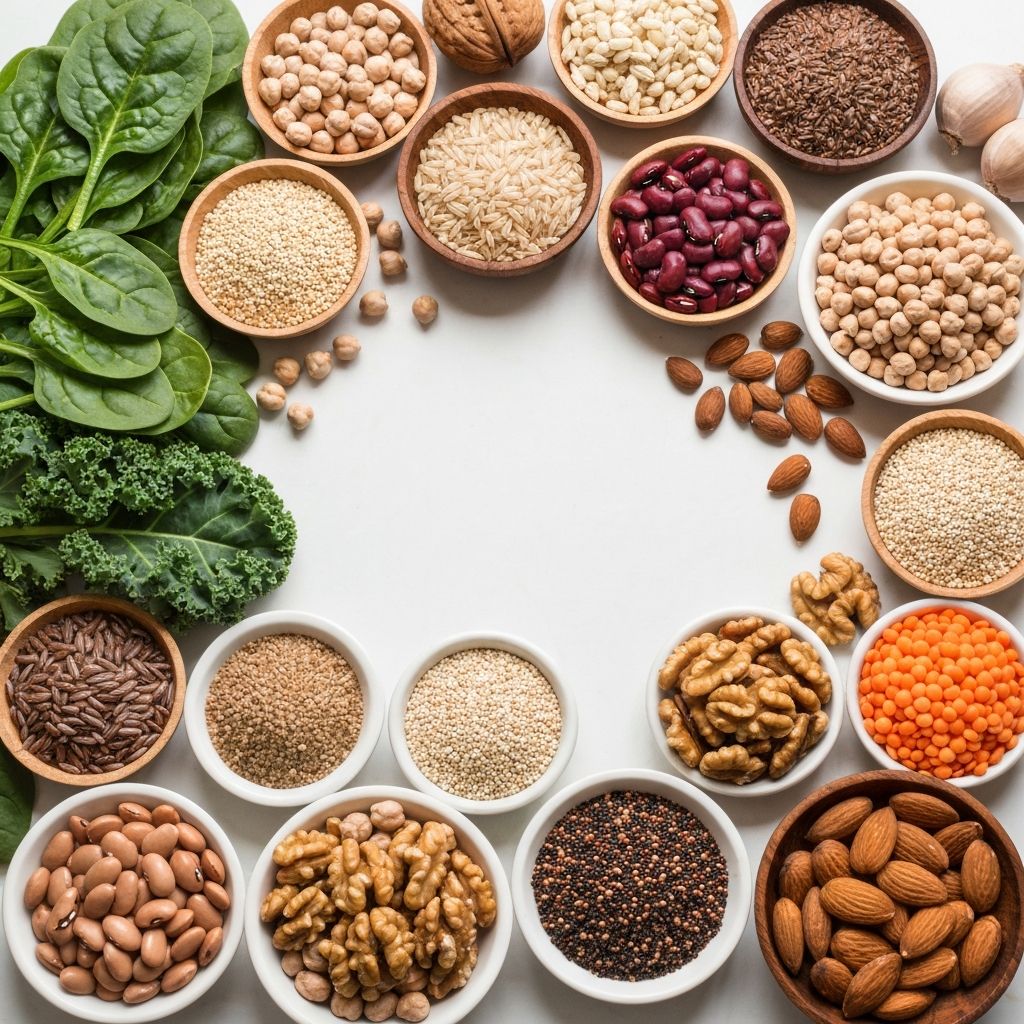
Macrominerals are dietary minerals present in relatively larger quantities in the human body. Here are key examples:
Calcium
Found in dairy, leafy greens, legumes, and fortified foods. Important for bone structure and cellular processes.
Magnesium
Present in nuts, seeds, whole grains, and dark leafy greens. Supports muscle function and energy production.
Potassium
Abundant in bananas, sweet potatoes, beans, and spinach. Essential for fluid balance and nerve signaling.
Sodium
Found in salt, processed foods, and naturally in many foods. Important for fluid balance and muscle function.
Phosphorus
Present in protein-rich foods, grains, and dairy. Works with calcium for bone health and energy production.
Sulfur
Found in garlic, onions, cruciferous vegetables, and proteins. Supports connective tissue and detoxification.
Activity Levels and Nutrient Needs
Different activity levels are associated with varying nutrient requirements. Generally, more active individuals have increased energy needs and may require higher intakes of certain nutrients. This explains general variations in dietary patterns across different lifestyles.

Whole Foods versus Typical Supplement Profiles
Whole Foods Approach
Whole foods contain complex nutrient profiles with naturally occurring compounds, fiber, phytonutrients, and co-factors that work synergistically. They provide nutrients in their natural context with biological matrix support. Whole foods are typically consumed as part of cultural eating patterns and contain thousands of bioactive compounds.
Typical Supplement Profiles
Supplements typically contain isolated or concentrated nutrients in standardized doses. They are formulated to provide specific nutrient levels and often include various binders and additives. Supplements represent a modern approach to concentrated nutrient delivery, often used to complement dietary intake or address specific dietary gaps in routine eating patterns.
Regional and Global Dietary Guidelines
Different countries and organizations have developed dietary guidelines based on scientific research and regional eating patterns. These guidelines provide general recommendations for nutrient intake, food group consumption, and healthy eating patterns for typical populations.

WHO Guidelines
The World Health Organization provides recommendations on macronutrient and micronutrient intakes for typical populations.
National Guidelines
Most countries develop dietary guidelines tailored to their population's health status and food availability patterns.
Mediterranean Pattern
Regional eating pattern emphasizing vegetables, legumes, whole grains, olive oil, and fish as typical staples.
Addressing Frequent Nutrient Myths
Different foods have different nutrient densities, fiber content, and metabolic effects. While calories are a measure of energy, the nutritional value and satiety provided by foods varies considerably based on their composition and processing level.
The body has specific nutrient requirements, and excessive intake of certain nutrients can have diminishing returns or unexpected effects. Balance and meeting recommendations is generally more important than maximizing intake.
Supplements vary significantly in quality, bioavailability, form, and composition. Different supplement formulations contain different types of nutrient forms, binders, and additional compounds that affect their typical use.
The origin of a nutrient does not inherently determine its value. Both naturally occurring and synthetic forms of nutrients can have similar effects. What matters is bioavailability, purity, and appropriate dosing based on nutritional science.
Individual nutritional needs vary based on age, activity level, genetic factors, health status, and cultural food preferences. Different demographics have different typical nutrient requirements and optimal dietary patterns.
Keep Discovering Nourishment Basics
Explore our educational resources to learn more about nutrition, food sources, and healthy eating patterns.