Copper Compounds - Enzyme Systems and Tissue Formation
Educational content only. This page provides factual information about copper, food sources, and general metabolic roles. It is not medical advice.
Understanding Copper
Copper is an essential trace mineral, meaning the body requires it in small quantities for proper function. It is a key component of several important enzymes and proteins involved in energy production and tissue formation.
General Roles in the Body
Copper plays several important roles in human physiology:
- Enzyme Cofactor: Copper is essential for numerous enzymes including cytochrome c oxidase (involved in energy production), lysyl oxidase (involved in connective tissue cross-linking), and superoxide dismutase (involved in cellular protection).
- Connective Tissue Formation: Copper is necessary for the synthesis and cross-linking of collagen and elastin, which are fundamental proteins in connective tissues including skin, bones, and blood vessels.
- Iron Metabolism: Copper is involved in iron utilization and transportation, supporting normal red blood cell function.
- Nervous System Function: Copper plays a role in myelin formation, which is essential for nerve signal transmission.
- Immune Function: Copper is involved in normal immune system function through its role in various immune enzymes.
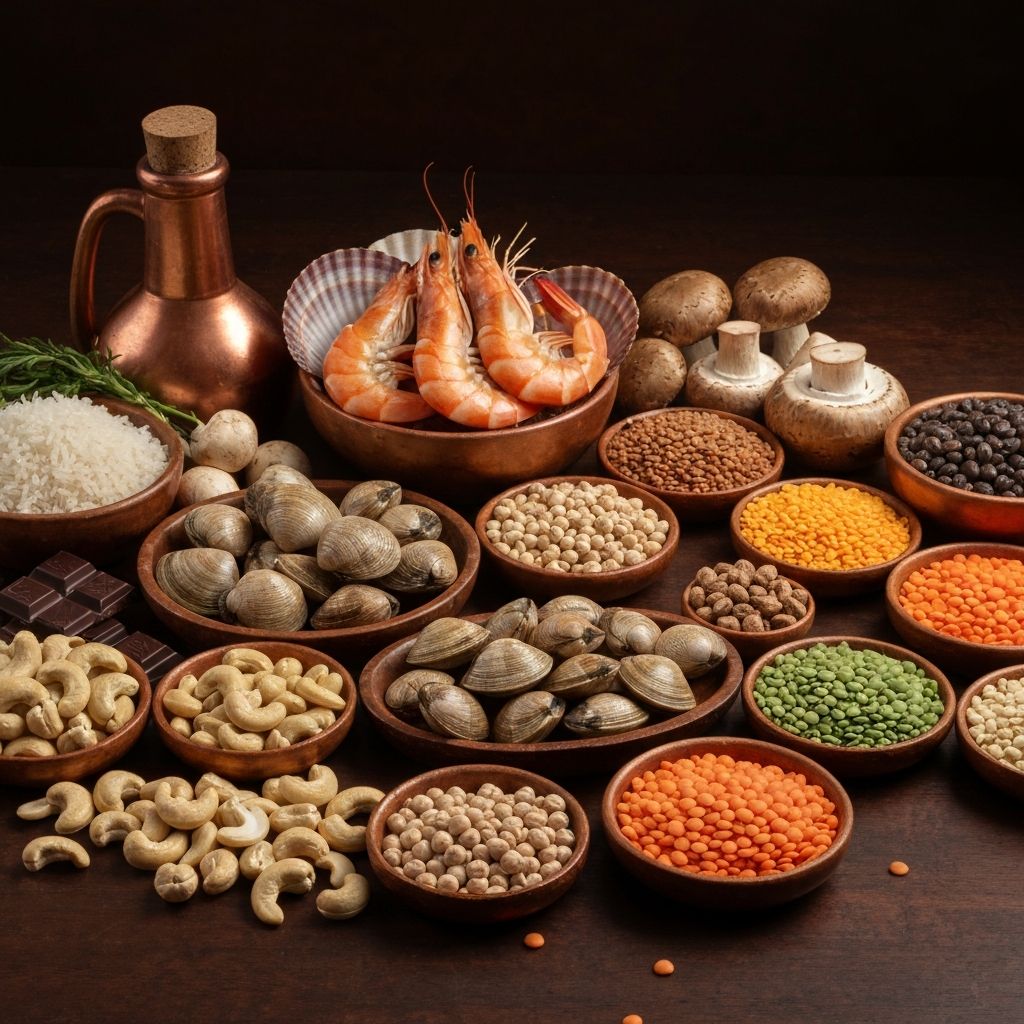
Shellfish, nuts, and dark chocolate are excellent dietary sources of copper
Common Dietary Sources
Rich Copper Sources
- Shellfish: oysters, clams, crab
- Organ meats: liver, kidney
- Nuts and seeds: cashews, sunflower seeds
- Dark chocolate and cocoa
Moderate Copper Sources
- Whole grains
- Legumes: beans, lentils
- Mushrooms
- Dried fruits
- Tea and coffee
Nutritional Reference Intakes
The recommended dietary allowance (RDA) for copper is:
- Adults aged 19 years and older: 900 mcg daily
- Variations exist for children and adolescents
Bioavailability Factors
Copper absorption and availability can be affected by:
- Food source (plant vs. animal based)
- Presence of other minerals (zinc, iron, molybdenum)
- Dietary phytates and fiber content
- Individual digestive health
Copper-Zinc Balance
Copper and zinc have an important relationship in the body. Very high zinc intake can interfere with copper absorption. A balanced dietary intake of both minerals is important for normal metabolism and enzyme function.
Dietary Patterns and Intake Variation
Copper intake varies among populations and individuals based on:
- Seafood consumption patterns
- Legume and grain consumption
- Nut and seed consumption
- Water copper content (varies by location)
- Processed food consumption
Important Note: This information is educational and not a substitute for medical advice. Individual nutritional needs vary. For personalized nutritional guidance, please consult appropriate healthcare professionals.