Fiber Types Concept - Soluble and Insoluble
Educational content only. This page explains fiber types and their general roles in digestion. It is not medical advice about digestive disorders.
Understanding Dietary Fiber
Dietary fiber refers to carbohydrates found in plant foods that are not digested by human digestive enzymes. Fiber is classified into two main categories based on its solubility in water: soluble and insoluble fiber.
Soluble Fiber
Soluble fiber dissolves in water to form a gel-like substance. Common sources include:
- Oats and barley
- Beans and legumes
- Peas
- Apples and citrus fruits
- Carrots
- Psyllium husk
Role: Soluble fiber slows digestion and can affect nutrient absorption patterns. It also serves as food for beneficial gut bacteria. In the digestive system, soluble fiber forms a gel that can affect how quickly food moves through the digestive tract.
Insoluble Fiber
Insoluble fiber does not dissolve in water and maintains its form as it moves through the digestive system. Common sources include:
- Whole wheat and whole grains
- Nuts and seeds
- Beans and legumes
- Vegetables, especially with skins
- Bran
Role: Insoluble fiber promotes digestive transit and adds bulk to stool. It helps keep things moving through the digestive tract at a normal pace, contributing to general digestive health and the physical movement of food through the system.
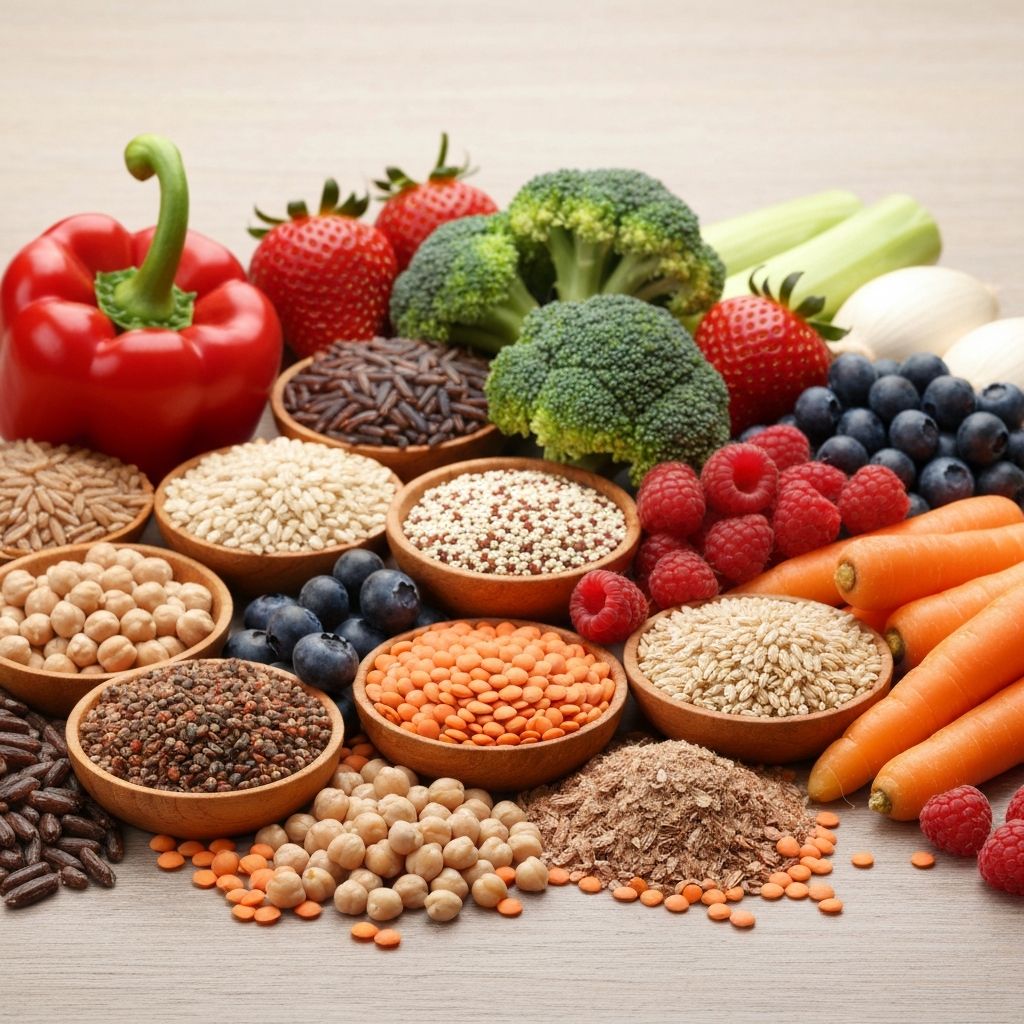
A variety of whole grains, vegetables, fruits, and legumes provide both soluble and insoluble fiber
Daily Fiber Recommendations
General dietary recommendations suggest:
- Adult males aged 19-50: 38 grams daily
- Adult females aged 19-50: 25 grams daily
- Adults 51 and older: slightly lower recommendations
- Variations exist for children and adolescents
Gut Environment and Digestive Transit
Dietary fiber affects the digestive environment in several ways:
- Digestive Transit Time: The rate at which food moves through the digestive system varies based on fiber intake and composition.
- Stool Bulk: Fiber increases stool volume and affects consistency, which influences digestive transit.
- Gut Bacteria: Fiber serves as a food source for beneficial bacteria in the colon, which produce short-chain fatty acids and other compounds.
- Nutrient Absorption: Digestive tract pH and transit time can affect how nutrients are absorbed.
Fiber in Whole Foods
Most whole foods contain a mixture of soluble and insoluble fiber. For example:
- Beans contain both types, with soluble fiber being more prominent
- Whole grain bread contains both, with insoluble fiber being more prominent
- Apples with skin contain both types of fiber
- Vegetables typically contain both soluble and insoluble fiber
Dietary Variation and Fiber Intake
Fiber consumption varies significantly among different populations and individuals based on:
- Availability of whole grain products
- Vegetable and fruit consumption patterns
- Legume consumption in cultural diets
- Food processing and refining practices
- Individual dietary preferences
Important Note: This information is provided for educational understanding of fiber types. Changes to fiber intake should be gradual. For personalized dietary guidance, especially regarding digestive health, please consult appropriate healthcare professionals.