Indonesian Traditional Roots & Herbs - Cultural Context
Educational content only. This page explores traditional herbs from a cultural and informational perspective. It does not constitute medical advice or claims about health benefits.
Traditional Herbs in Indonesian Cuisine
Indonesia has a rich history of using traditional roots, rhizomes, and herbs in daily cooking and cultural practices. These plant materials have been integrated into Indonesian food culture for centuries and continue to be important components of traditional eating patterns and culinary traditions.
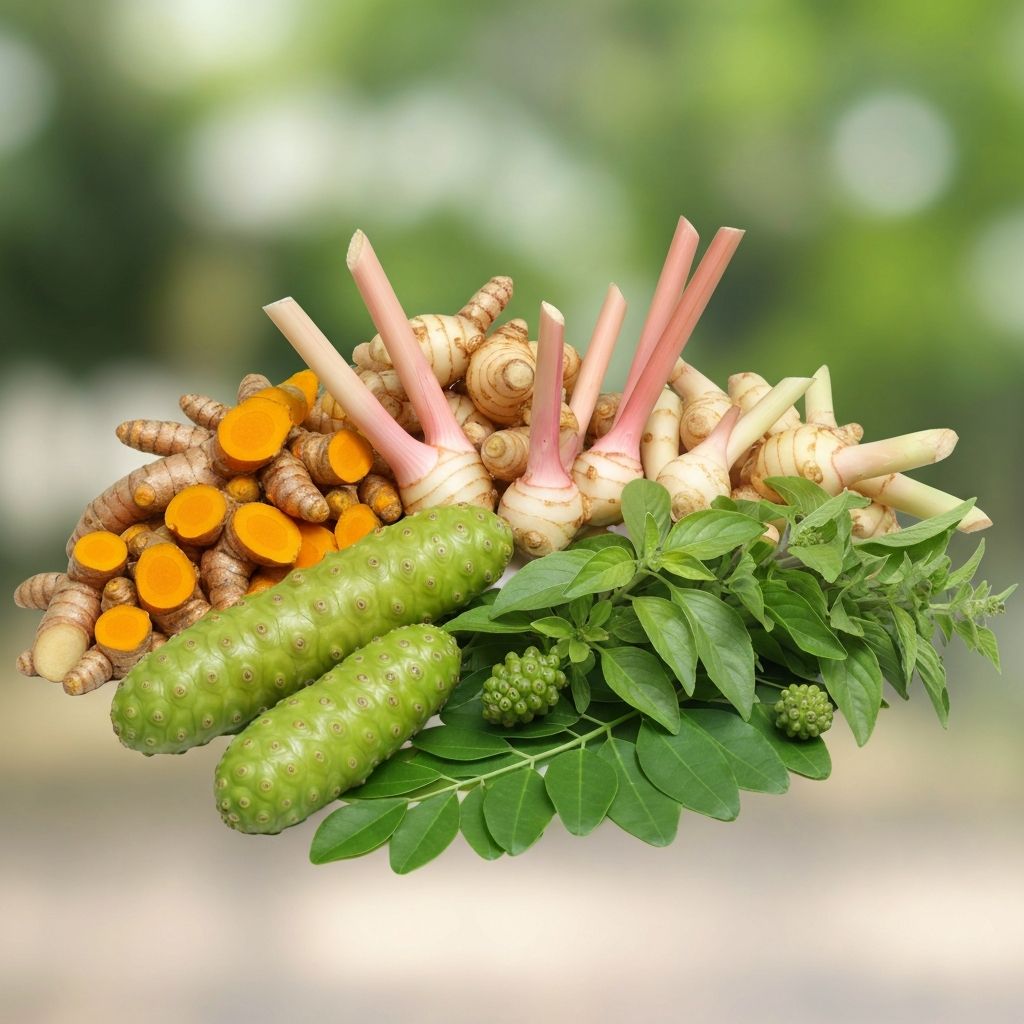
Indonesian traditional herbs are integral to regional cooking and food culture
Turmeric (Kunyit)
Traditional Use: Turmeric is one of the most important spices in Indonesian cuisine. It's used in various traditional dishes and has been used in traditional wellness practices for centuries.
Description: Turmeric is a golden-yellow rhizome with a warm, slightly bitter taste. It contains the compound curcumin as one of its active constituents.
Culinary Applications: Used in rice dishes, curries, and traditional preparations. Fresh turmeric is often used in Indonesian cooking alongside ginger and other spices.
Galangal (Lengkuas)
Traditional Use: Galangal is a fundamental ingredient in Indonesian cuisine, particularly in soups and curry pastes.
Description: A rhizome similar to ginger with a citrusy, pine-like flavor. It contains various essential oils and plant compounds.
Culinary Applications: Essential in traditional soups like Tom Kha, curry pastes, and seafood dishes. Often used fresh or dried.
Holy Basil (Kemangi)
Traditional Use: Holy basil is a revered plant in Indonesian and Southeast Asian cultures, used in cooking and traditional practices.
Description: A fragrant herb with peppery and clove-like notes. It's botanically different from common basil.
Culinary Applications: Used fresh in salads, soups, and stir-fries. Often added at the end of cooking to preserve its aromatic qualities.
Moringa (Kelor)
Traditional Use: Moringa has been used in Indonesian cuisine and traditional practices for generations.
Description: Moringa leaves are small and highly nutritious. The plant also produces pods (drumsticks) that are edible. Contains various plant compounds.
Culinary Applications: Leaves are used in soups and traditional dishes. Moringa pods are cooked in various traditional preparations.
Noni (Mengkudu)
Traditional Use: Noni has been used in traditional Indonesian practices and is part of the cultural food heritage.
Description: A tropical fruit with a distinctive appearance and unique taste. Contains various plant compounds and nutrients.
Culinary Applications: Can be consumed as juice, made into traditional beverages, or incorporated into various preparations.
Java Tea (Teh Jawa / Orthosiphon)
Traditional Use: Java tea leaves have been used in Indonesian traditional tea preparations for centuries.
Description: Herbaceous plant with small leaves containing various plant compounds and minerals.
Culinary Applications: Traditionally brewed as a tea. Often consumed for its flavor and as part of daily beverage routines.
Traditional Ginger (Jahe)
Traditional Use: Ginger is fundamental to Indonesian cooking and traditional practices.
Description: A warming rhizome with pungent, spicy notes. Contains gingerols and shogaols as active plant compounds.
Culinary Applications: Used fresh, dried, or powdered in countless dishes, beverages, and traditional preparations.
Plant Compounds in Traditional Herbs
These traditional herbs contain various plant compounds that researchers have studied:
- Polyphenols: Plant compounds with antioxidant properties found in many herbs
- Essential Oils: Aromatic compounds contributing to flavor and aroma
- Alkaloids: Nitrogen-containing compounds with various biological activities
- Terpenes: Volatile organic compounds contributing to smell and taste
- Minerals: Various essential minerals present in herbs
Cultural and Dietary Context
These herbs are not simply individual ingredients but are integrated into:
- Traditional recipe formulations passed down through families
- Culinary practices that have evolved over centuries
- Regional food cultures specific to different Indonesian areas
- Daily eating patterns and meal preparation routines
- Social and family gatherings centered around shared meals
Modern Context
Today, traditional Indonesian herbs continue to be important in:
- Contemporary Indonesian cuisine
- Growing global interest in traditional foods
- Culinary tourism and cultural exchange
- Scientific research into traditional plant uses
- Sustainable agriculture and local food production
Important Note: This page provides cultural and informational context about traditional Indonesian herbs. It does not constitute medical advice or claims about therapeutic effects. For health-related guidance, please consult appropriate healthcare professionals.